

The Problem Is Identity.
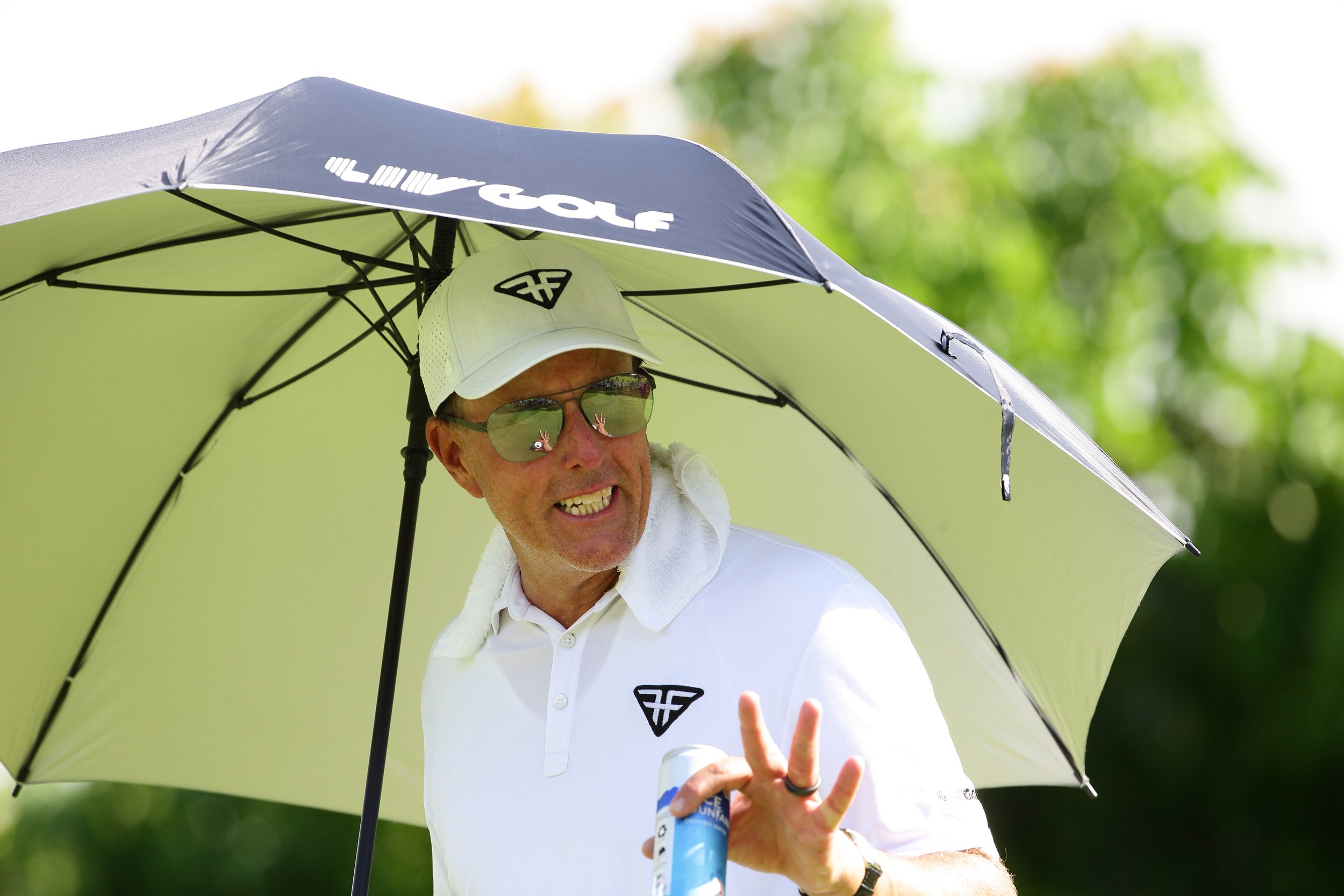
Every week on The Cut Stuff we lead with a big talking point. This week saw the news confirmed that LIV Golf has struck a deal with the OWGR to earn some global ranking points for its players. The restrictions on how the points are handed out leaving the players questioning the fairness of the deal, with only the top 10 finishers at its events awarded world ranking points. And all this got me thinking. What is the key problem with LIV? It’s not competition or talent, it’s cutlure and product.
Competition Was Never the Problem
For all the noise surrounding LIV Golf, one point is often missed: the existence of a competitor to the PGA Tour is not the problem.
Professional sport benefits from tension. Rival structures can sharpen standards, force innovation and challenge complacency. Golf was never harmed by the idea of competition. In fact, periods of disruption - from the emergence of the World Golf Championships to the FedEx Cup era - have often preceded structural growth.
What continues to undermine LIV Golf is something more fundamental: its format and its identity.
Three seasons in, the format remains difficult to explain - even to an engaged fan. A 54-hole individual competition layered with a 12-team season-long franchise model. A shotgun start across all groups, compressing viewing windows but flattening narrative build. A points system that determines both individual and team champions, yet rarely alters a player’s broader standing in the sport.
“LIV feels less like a distilled vision of what golf could become and more like the output of a creative meeting in which every concept survived the edit.”
Recent developments underline the structural tension. LIV events were finally granted Official World Golf Ranking recognition in a limited capacity, but only a small portion of the field receives points - and the weighting remains modest compared to full-field PGA and DP World Tour events. As a result, several major champions within LIV’s ranks have seen their world rankings drift outside the top 50 despite consistent finishes within the league.
The team championship distributes significant prize money, yet it carries little historical consequence. A player may win a season-long team title and still see no material impact on Ryder Cup eligibility, major qualification, or career narrative.
None of the individual ideas are indefensible. Shorter events suit modern broadcast windows. Team golf has thrived in the Ryder Cup format. Guaranteed contracts provide financial stability.
The issue is accumulation.
LIV feels less like a distilled vision of what golf could become and more like the output of a creative meeting in which every concept survived the edit. Team branding. Captains. Drafts. Music on tees. Franchise logos. Collective scoring. Global exhibitions. Aggressive expansion rhetoric.
Less has rarely felt more distant.
Golf, at its best, is spare. It is tension stretched over four rounds. It is individual accountability. It is the slow burn of momentum and collapse. Its drama is not manufactured; it emerges from accumulation - of shots, of pressure, of history.
When formats become layered with mechanisms designed to accelerate excitement, they often achieve the opposite. Complexity dilutes clarity. Shotgun starts remove the natural crescendo of a Sunday back nine. Simultaneous finishes eliminate the theatre of staggered pressure. Spectacle replaces narrative.
And narrative is what gives sport meaning.
The branding compounds the issue.
LIV presents loudly - saturated visuals, team slogans, high-volume presentation. Its launch campaign leaned heavily into disruption. Yet disruption is not the same as identity. Volume is not the same as resonance.
“Without soul, connection becomes transactional. Viewership spikes around headline signings and debut events have not consistently translated into sustained weekly engagement. ”
The strongest sporting brands carry continuity. The Masters needs no reinvention. The Open Championship does not require amplification. Their authority is cumulative - reinforced annually by repetition, rivalry and consequence.
LIV has secured elite players, significant funding and global venues. But what it has not yet built is emotional weight. It lacks connective tissue to the sport’s existing architecture. Its events operate adjacent to - rather than integrated within - the game’s traditional milestones.
Without soul, connection becomes transactional. Viewership spikes around headline signings and debut events have not consistently translated into sustained weekly engagement. Attendance varies by market. Team allegiances remain commercially branded rather than organically formed.
Fans may watch for talent. They may follow individuals. But emotional investment requires stakes that feel earned and structures that feel coherent.
This is why the debate around LIV so often misses the point. The question is not whether professional golf should have multiple tours. It is whether a new tour understands the essence of the sport it is attempting to reshape - and how its offering complements, rather than complicates, the existing landscape.
Competition was never the issue.
Coherence, compatibility and craft still are.
NEWS-IN-BRIEF
McIlroy: The Players Does Not Need Major Status
Rory McIlroy has dismissed the idea that The Players Championship should be designated as men’s golf’s fifth major, despite renewed marketing efforts around the event.
The world No. 2 described The Players as “one of the best tournaments in the world” with a strong identity of its own, but said he remains a traditionalist when it comes to major championships. Men’s golf, he argued, does not need to expand beyond its existing four.
The tournament, held at TPC Sawgrass each March, has long been informally labelled the “fifth major.” This year’s promotional campaign carries the tagline “March is going to be major.” McIlroy’s intervention signals resistance from within the player base to formal reclassification.
He also suggested the PGA Championship’s move from August to May has diluted its identity, arguing it “needs to go back to August” to regain distinct positioning in the calendar.
The broader issue is differentiation. In a crowded schedule, identity remains one of golf’s most valuable assets.
Ffion Tynan Turns Professional After Securing LET Card
Welsh golfer Ffion Tynan has turned professional after earning her Ladies European Tour card through qualifying school in Morocco.
The 22-year-old’s journey began at age eight during a family holiday in Florida, where she chose a golf camp over a visit to Disney World. She later developed through junior competition before moving to the United States on a college scholarship, attending the University of Arkansas and the University of Missouri.
Tynan’s pathway - junior golf, US collegiate system, Q-School progression - reflects the increasingly structured route into the professional women’s game.
Despite securing her tour card, she will not compete in the season-opening PIF Saudi Ladies International due to category restrictions, highlighting the competitive nature of tournament access even after qualification.
Her professional debut will follow later in the season.
Bronte Law Returns to Competition After Becoming a Parent
Bronte Law returns to Ladies European Tour action this week at the PIF Saudi Ladies International, marking her first competitive appearance since becoming a parent.
Law and her wife welcomed their first child in November. The former Solheim Cup player acknowledged she enters the season without certainty over preparation levels but expressed enthusiasm about returning to competition.
She plans to compete in approximately 10 LET events in 2026, balancing her playing schedule with her role as vice-captain of Team Europe’s PING Junior Solheim Cup side and her involvement in grassroots initiatives.
Her return continues a growing trend of visible parenthood within women’s professional golf, reflecting broader shifts in how tours accommodate family life alongside elite sport.
Fleetwood Addresses “Too Nice” Narrative
Tommy Fleetwood begins his PGA Tour season ranked fourth in the world following a breakthrough year that included his first PGA Tour victory at the Tour Championship and success in the Ryder Cup.
Despite his improved record, discussion continues around whether Fleetwood possesses the competitive “edge” required to win major championships. Rory McIlroy recently suggested the Englishman had developed a sharper mentality over the past year.
Fleetwood rejected the notion that personality must change to win, stating he remains committed to being himself while continuing to refine his competitive approach.
After 163 PGA Tour starts without a win prior to his breakthrough, Fleetwood’s trajectory now places him firmly within major championship conversations for 2026.
Matsuyama Playoff Disruption at Phoenix
Hideki Matsuyama’s playoff defeat at the WM Phoenix Open was marked by an unusual interruption on the first extra hole.
As Matsuyama began his backswing, a security guard dropped a chair near the tee box, forcing the Japanese player to abort his swing. After resetting, he pulled his subsequent drive into the water.
Chris Gotterup capitalised, holing a 27-foot birdie putt to secure his fourth PGA Tour title and his second victory of the 2026 season.
Matsuyama has now gone 12 months without a win and falls to a 4-2 record in PGA Tour playoffs. While the dropped chair was not solely responsible for the outcome — he had struggled with his driver throughout the final round - the episode illustrates the narrow margins that define sudden-death competition.
Augusta’s Door Remains Closed
Gary Player has expressed disappointment that Augusta National has refused his request to play a round with three of his grandsons.
The three-time Masters champion, who made 52 starts between 1957 and 2009 and has served as an honorary starter since 2012, is not a member of the club and therefore cannot invite guests. Only members may host rounds outside Masters week.
Player, now 90, noted that other major venues would accommodate such a request. Augusta, he said, will not.
The irony is historical. Alongside Arnold Palmer and Jack Nicklaus, Player formed golf’s “Big Three,” a trio that helped elevate the Masters into a global spectacle during the 1960s. Palmer and Nicklaus were both invited to become members. Player was not.
“I accept it,” he said. “But I accept it with sadness.”
The episode is a reminder that Augusta National’s exclusivity remains uncompromising even for those who helped build its mythology.
Fleetwood Goes Sponsor-Free
Tommy Fleetwood arrived at Pebble Beach without an apparel deal and without urgency to sign one.
Following the conclusion of his Nike contract, the world No. 4 has embraced life as a rare clothing free agent. This week, that meant wearing Pebble Beach-branded gear sourced directly from the pro shop.
Fleetwood has recently rotated through Lululemon, Vuori and even Masters-branded apparel. At Pebble, he leaned into the local logo.
“It’s quite nice to be wearing Pebble Beach clothing,” he said. “I’m a big golf fan.”
For a player of Fleetwood’s global profile, the absence of a sponsor is unusual - and temporary, many suspect. But the moment reflects a subtle shift in golf fashion: brand freedom as identity.
Not every statement requires a contract.
Charlie Woods Chooses Florida State
Charlie Woods has verbally committed to play college golf at Florida State beginning in 2027.
The high school junior currently sits No. 21 in the Rolex AJGA Rankings and won last year’s AJGA Team TaylorMade Invitational. He helped lead The Benjamin School to a state title, posting a team-best 68 in the final.
His decision aligns him with one of the NCAA’s stronger recent pipelines under coach Trey Jones, which has produced players including Brooks Koepka and Daniel Berger.
The surname guarantees attention. The ranking justifies it.
For the first time, Charlie Woods’ path is becoming structured rather than symbolic.
McIlroy Returns to Blades
Rory McIlroy has abandoned his brief experiment with cavity-back irons and returned to his RORS PROTO muscle-backs ahead of his PGA Tour season debut.
After testing TaylorMade P7CB irons during three DP World Tour starts finishing T14, T3 and T33, McIlroy decided the feel was not sufficiently familiar under pressure.
The cavity-backs offered greater forgiveness, reducing mishit dispersion from roughly 10-15 yards to closer to five. But they introduced what he described as a “right bias” that altered his preferred ball flight.
“That experiment’s over,” McIlroy said at Pebble Beach.
For the second-ranked player in the world, the decision underscores a truth elite golfers rarely escape: trust outweighs theory.
So far this season, the majority of tour winners have still used blade-style irons.
Tradition, once again, proves resilient.
OBJECT OF DESIRE
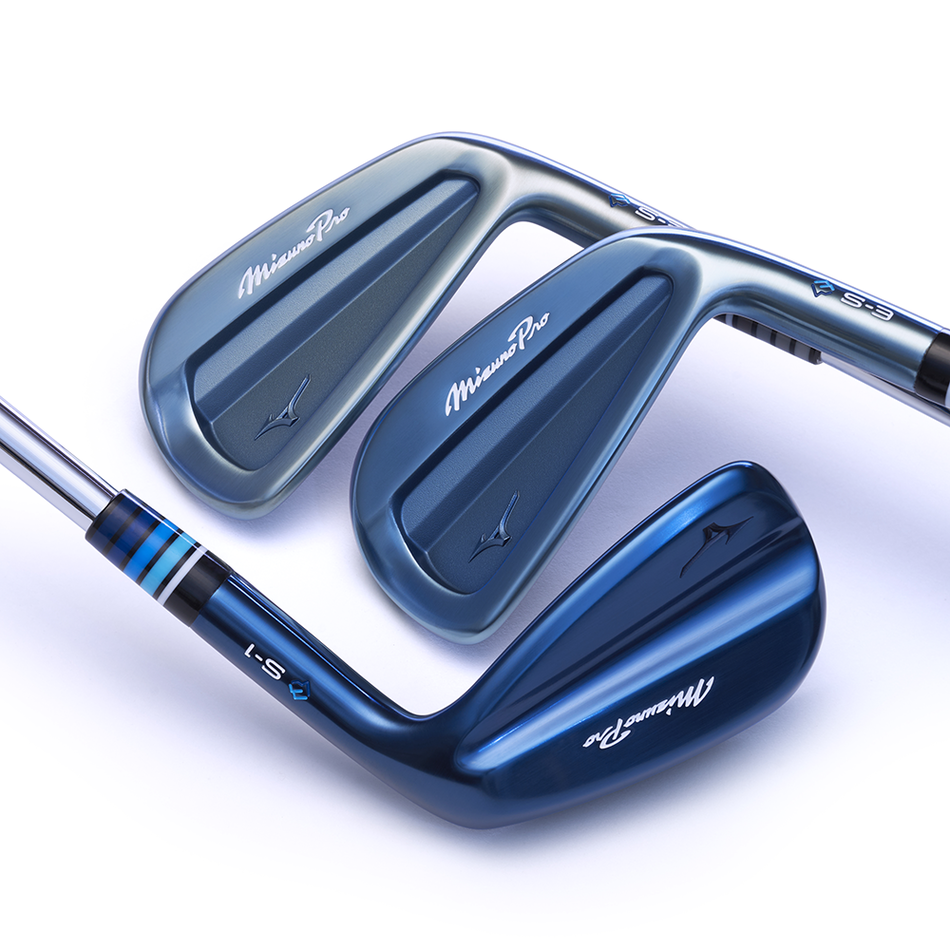
#001: The Mizuno Pro S3 Iceberg Set
Mizuno | £2,499
Precision, Composed in Blue
There is a quiet confidence to a properly built iron set.
Not one that tries to be everything at once, but one that understands where performance matters most. Increasingly, tour professionals are turning to mixed sets - forgiving long irons for stability, muscle-backs in the scoring clubs for precision. It is not compromise. It is optimisation.
The Mizuno Pro S3 Iceberg leans fully into that philosophy.
The 3- through 6-irons are shallow cavity-backed S-3s, engineered to offer a fraction more launch and margin without surrendering feel. From the 7-iron through pitching wedge, the set transitions into muscle-backed S-1s - compact, exacting, built for trajectory control and distance discipline.
The structure is deliberate. The finish is equally so.
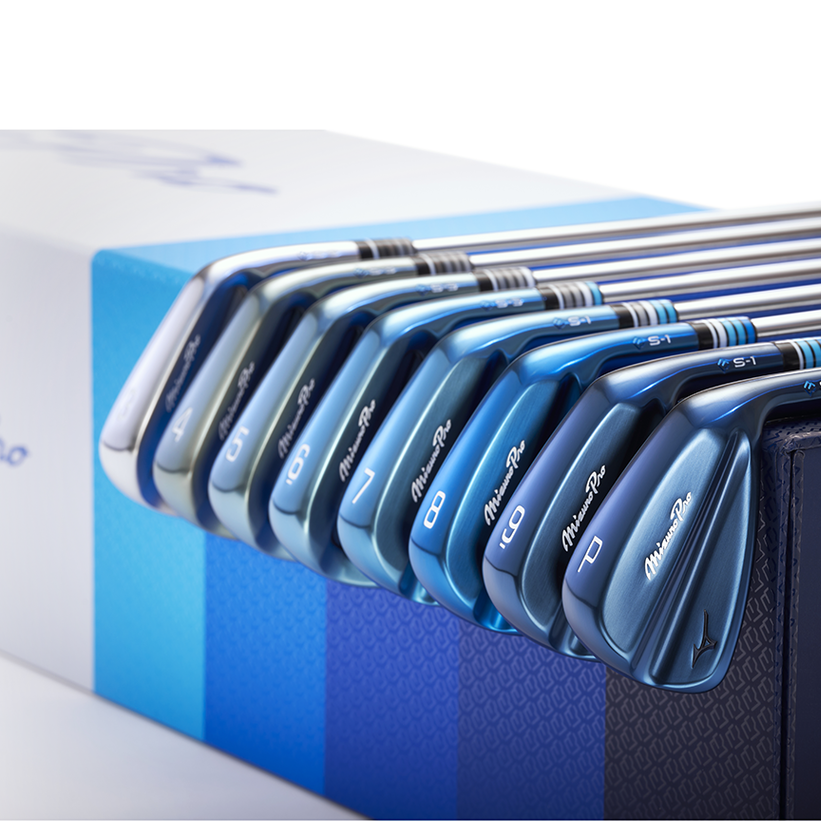
The “Iceberg” edition carries an ombré gradient that moves from an almost glacial blue in the long irons to a deep navy in the scoring clubs. It is not loud. It does not chase attention. It signals refinement — a visual cue that something intentional sits beneath the surface.
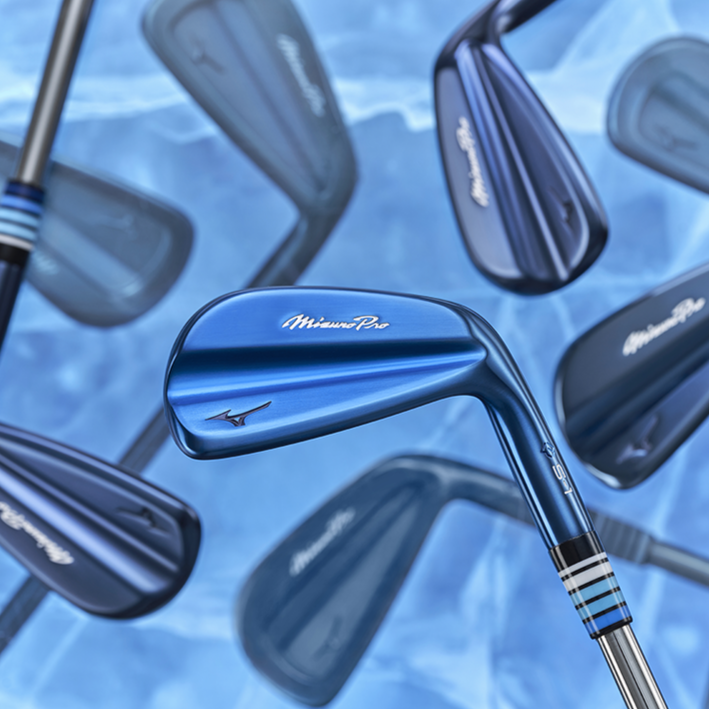
Mizuno has long built its reputation on feel. This set extends that identity into composition. Precision where you demand it. Stability where you need it. Aesthetic restraint throughout.
Limited in number. Designed with clarity.
Not just an iron set - a considered statement.
STYLE
THE BRAND LIST: #001: MALBON GOLF
Malbon Golf and the Reframing of the Fairway
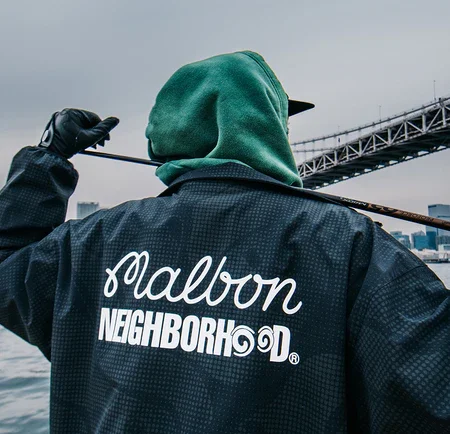
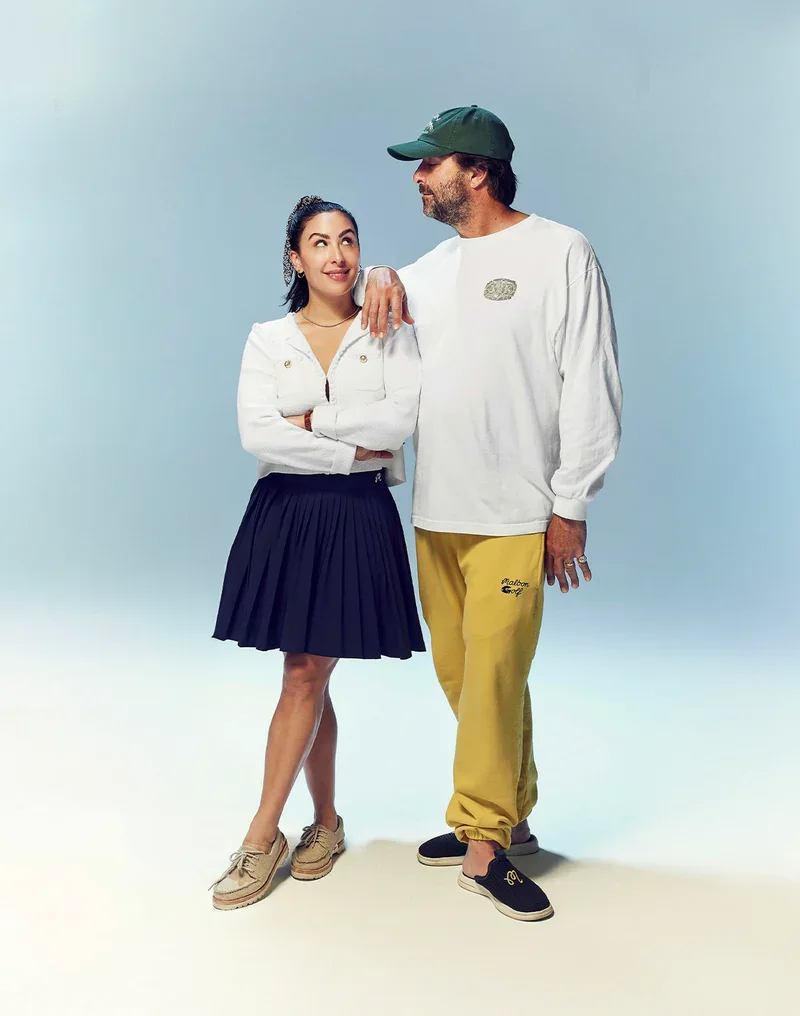

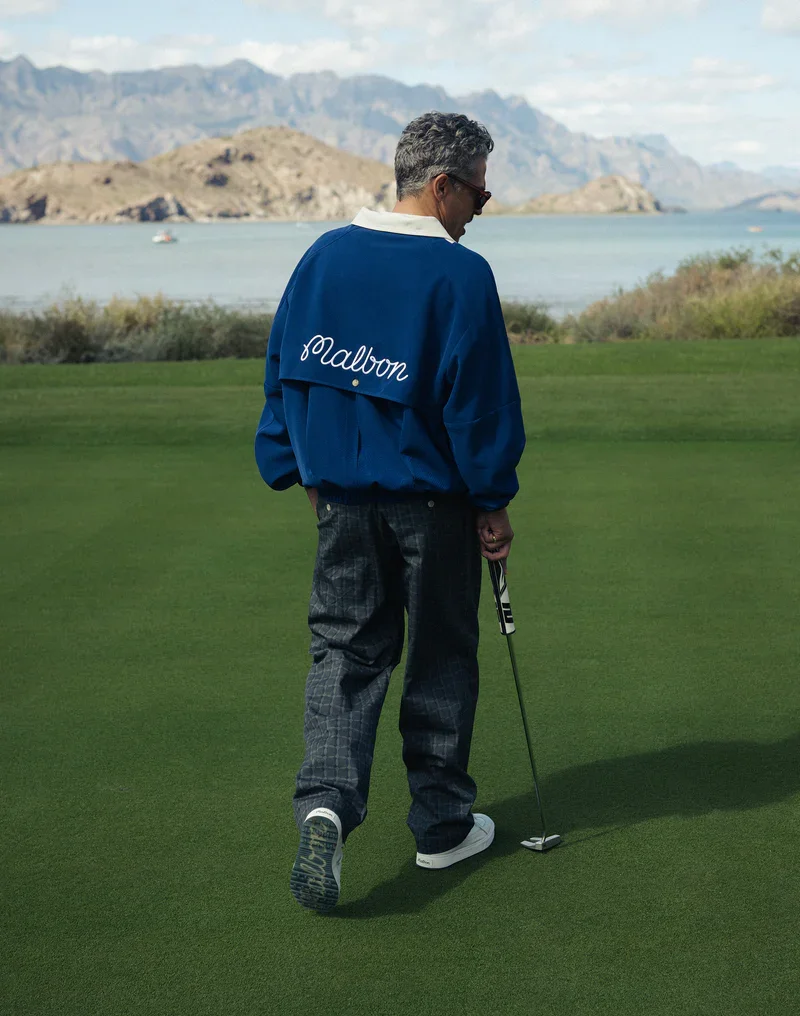
Malbon Golf did not emerge from a clubhouse. It emerged from Los Angeles.
Founded in 2017 by Stephen and Erica Malbon, the brand positioned itself less as a traditional golf label and more as a cultural bridge - between fairways and fashion, between sport and street, between heritage and self-expression.
That distinction matters.
For decades, golf apparel followed a narrow aesthetic lane: performance fabrics, muted palettes, and silhouettes dictated by convention. Malbon approached the sport from the outside in. It introduced graphic storytelling, collaborative capsules, and references drawn from music, art and contemporary design. The clothes felt less like uniform and more like identity.
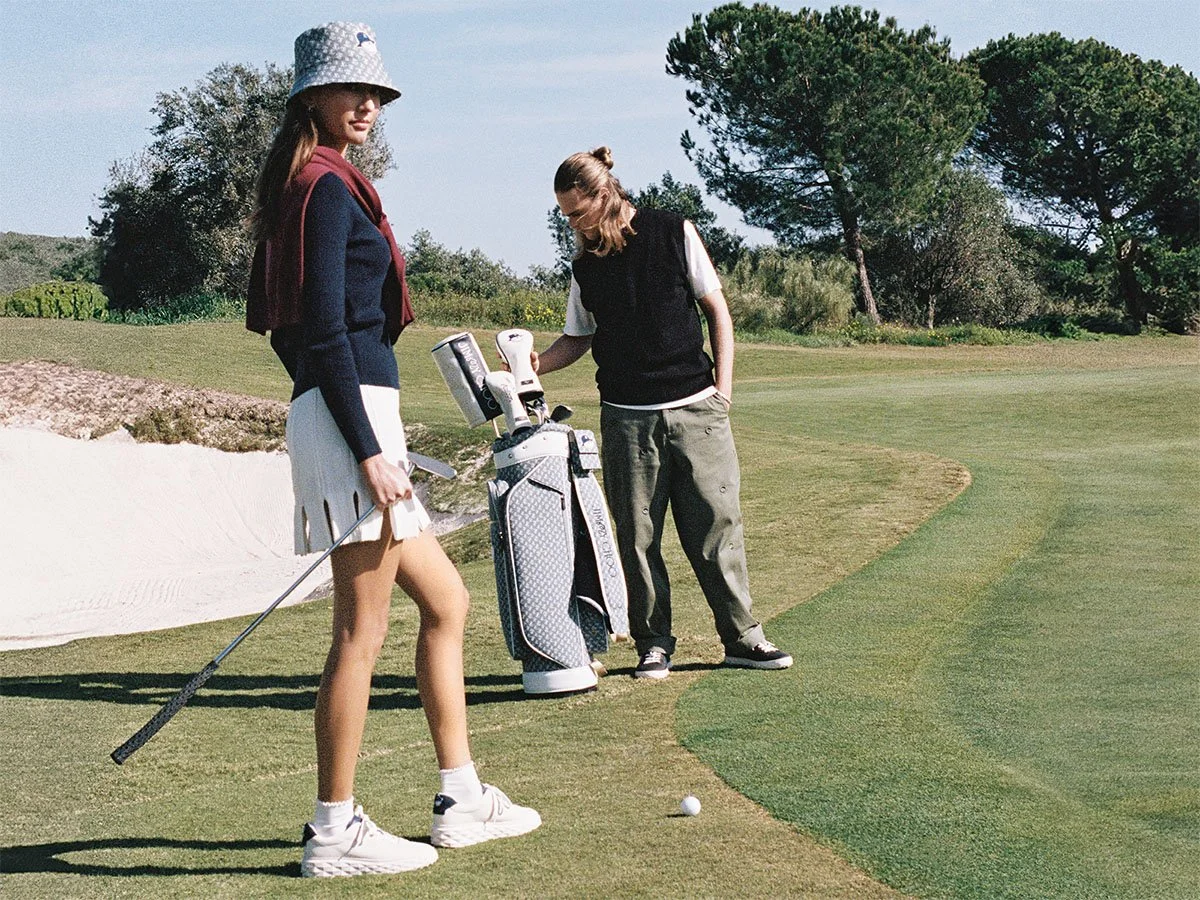
Its now-recognisable Buckets logo became shorthand for a different kind of golfer - one comfortable in blending tradition with individuality.
Malbon’s coolness is not accidental. It understands that golf’s evolution is cultural as much as competitive. As younger audiences engage with the sport - through social media, alternative tours, simulator leagues and urban practice spaces - the visual language of golf has had to expand. Malbon recognised that early.
Collaboration sits at the centre of its strategy. Partnerships across sport, streetwear and luxury have reinforced its positioning as a brand that belongs as easily off the course as on it. That fluidity is central to its appeal.
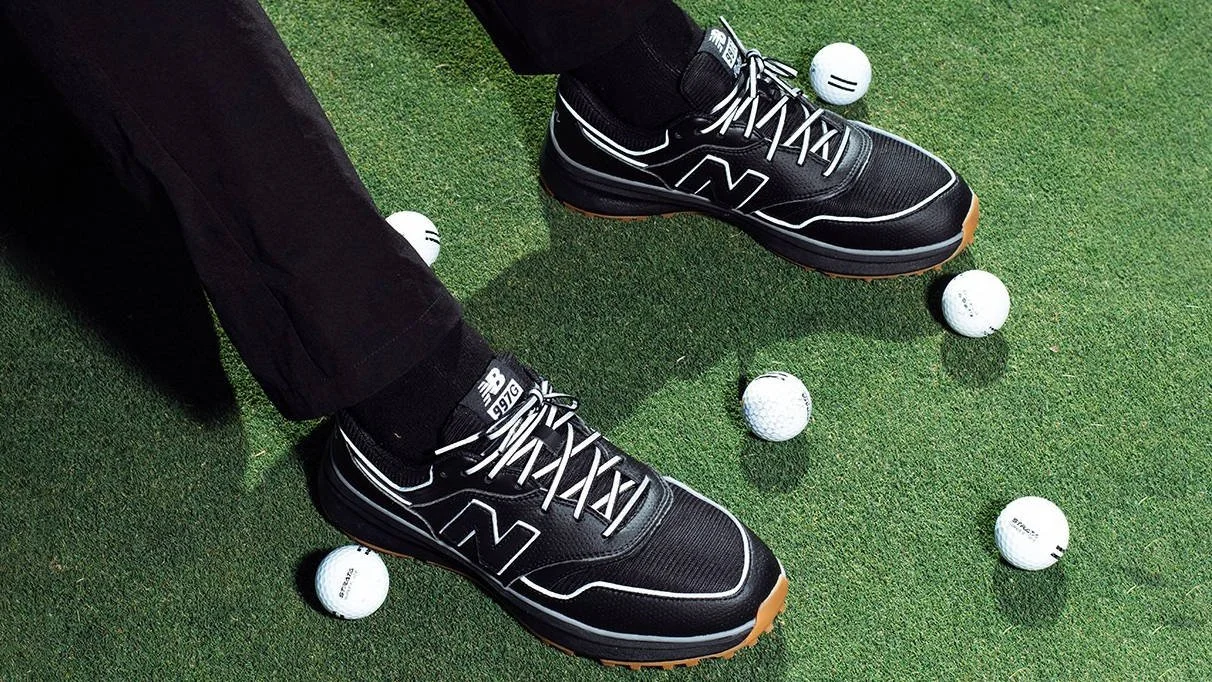
But the deeper shift is philosophical. Malbon frames golf as inclusive and expressive rather than exclusive and codified. “Making the green the common ground” is less slogan than positioning - an attempt to widen the cultural perimeter of the sport.
It works because it does not reject golf’s past. It reframes it. Traditionalists may see disruption. A growing segment sees accessibility.
In a sport negotiating its identity, Malbon feels contemporary because it understands that style is no longer peripheral. It is part of participation. The fairway, increasingly, is a cultural space as much as a competitive arena.
Malbon simply dressed accordingly.
THE WEEKEND
PGA Tour - AT&T Pebble Beach Pro-Am
The only PGA Tour event on the calendar this weekend, the AT&T Pebble Beach Pro-Am runs through Sunday across Pebble Beach Golf Links and Spyglass Hill. As the first Signature Event of the 2026 season, it carries a $20 million purse and 700 FedExCup points, drawing a field that includes Rory McIlroy, Scottie Scheffler, Tommy Fleetwood and other top-20 players. McIlroy returns as defending champion — and the event’s mix of pros and amateurs creates an unusual competitive texture. While Pro-Ams rarely shape season arcs, they do offer early signals about form, strategy and how elite players are adjusting after the off-season. How the top names balance risk and reward here may forecast who separates as major season nears.
Ladies European Tour - PIF Saudi Ladies International
The 2026 season kicks off in Riyadh with the PIF Saudi Ladies International, a 72-hole stroke play event with a $5 million purse - one of the richest on the LET outside majors and a key stop in the expanding PIF Global Series. A field of 120 players, including world top10 talent is competing for Order of Merit points, deeper Rolex World Ranking significance and early season momentum. This tournament has become a signature event in women’s golf, representing both competitive opportunity and a broader push toward parity in prize distribution.
LIV Golf - Adelaide (72-Hole Festival Format)
LIV Golf Adelaide continues its expanded four-day, 72-hole format this weekend. Built around a festival atmosphere that includes art, food and entertainment alongside competition, organisers are reporting strong attendance numbers potentially surpassing last year’s 102,000 crowd. While the spectacle does not change the structural questions around LIV’s competitive architecture, the weekend provides another test of the brand’s ability to convert novelty into sustained engagement.
International & Regional Tours - Sunshine Ladies Tour
Sunshine Ladies Tour moves toward the NTT Data Ladies Pro-Am in South Africa, a growing stop on the early women’s season that offers a competitive platform for players outside the biggest global stages.